What to Look for in a Cannabis Environmental Control System in 2026
The best control systems do more than switch equipment on and off. They show what the crop experienced, prove whether equipment performed, and help teams make better decisions before losses show up.
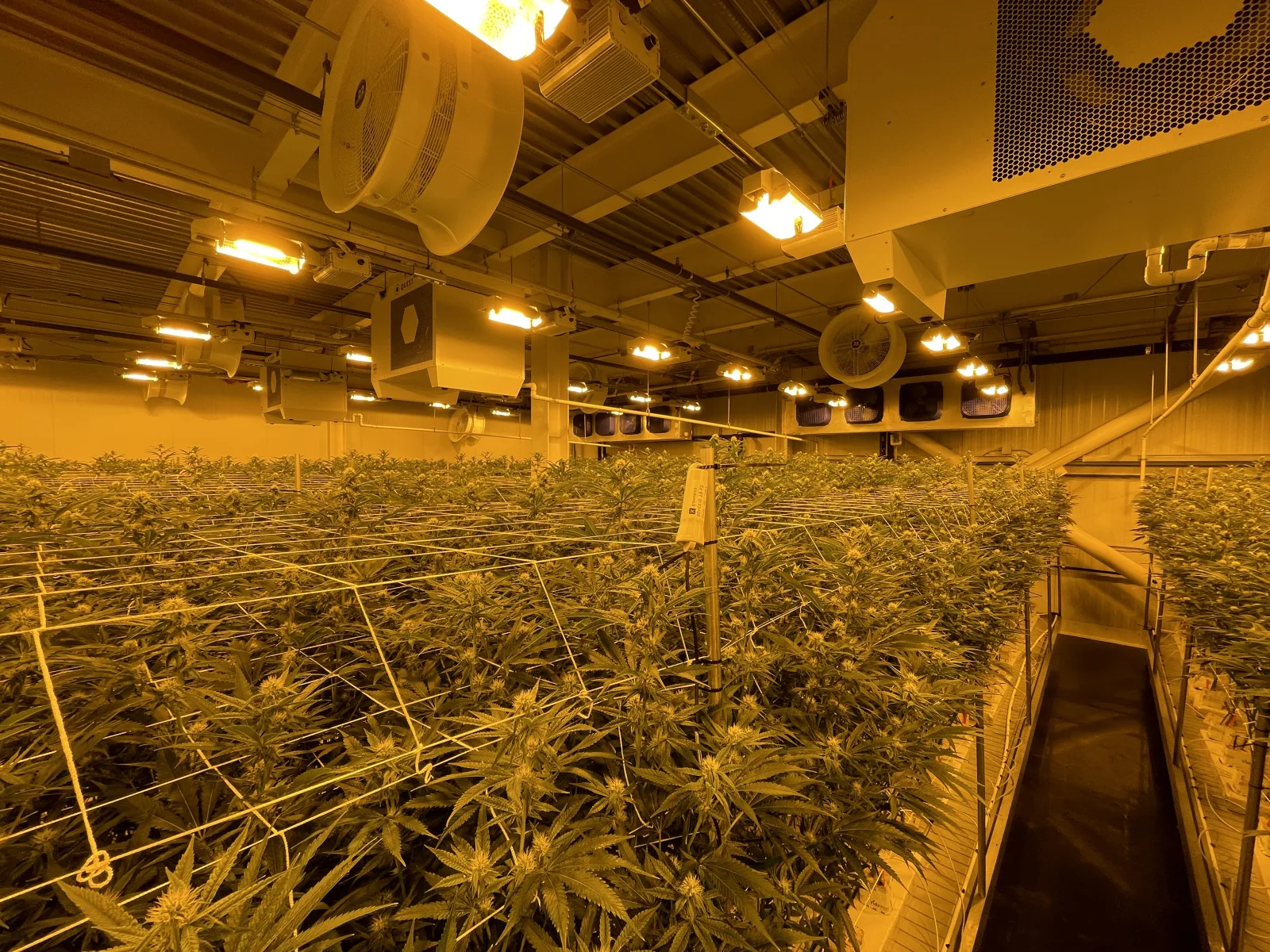
Choosing your controls is one of the highest leverage equipment decisions you will make.
Environmental control used to be a simpler question.
Can the system turn equipment on and off? Can it hold a setpoint? Can it alert someone when the room drifts out of range?
Those questions still matter, but they fall short of what a commercial CEA operation actually needs.
The ceiling on yield is often the building itself and the equipment chosen to run it. The best grower in the world cannot turn a flawed facility into a successful business. Facility design and equipment selection set the ceiling, and nothing downstream can fully recover what a weak control system gives up.
The environmental control system sits at the center of that decision. It defines how every other piece of equipment will function and what you can see, prove, respond to, and improve.
Setpoints are not the same as crop reality
Most control systems are built around setpoints.
Set a temperature target. Set a humidity target. Set CO2 ranges. Schedule irrigation. Trigger equipment when conditions move outside the band.
That is necessary, but it can create a false sense of control.
A control system can report that it executed a command. That does not prove the crop experienced the intended condition. It does not prove every zone responded the same way. It does not prove the canopy stayed inside the desired range. It does not prove a corner of the room avoided a hot, wet microclimate. It does not prove irrigation reached every zone evenly.
The crop does not live in the average.
It lives in specific locations, under specific airflow patterns, at specific canopy heights, across specific windows of time. If the system cannot see that variation, the dashboard may look clean while the room is telling a different story.
That is why the next generation of cultivation control needs more than equipment automation. It needs measurement, validation, and interpretation.
The first buying criterion: resolution
Resolution is the level of detail you have into what is happening across space and time.
Spatial resolution answers what is happening in different parts of the room. How much variation exists from wall to canopy. Whether there are recurring hot, wet, dry, or stagnant zones. Whether one bench, aisle, or corner behaves differently than the average.
Temporal resolution answers how often you see the room. Whether you can catch stress events before they become crop issues. Whether you can prove what happened during lights on, lights off, irrigation, dehumidification, or HVAC transitions.
If the equipment you select can only see room averages, you cannot optimize past room averages. A lack of precision can often lead to no control at all.
Most facilities are still under-instrumented for the questions they are trying to answer. One or two wall sensors are enough to trigger equipment. They are not enough to understand the crop environment or yield outcomes.
More sensors are not automatically the answer either. Random placement creates a random average. Useful resolution requires the right measurements, in the right places, with the right context.
When evaluating a system, ask:
- Where are the sensors placed relative to the canopy and root zone?
- How frequently is data collected?
- Can the system show spatial variation, not just room averages?
- Can it identify recurring patterns across time?
- Does it help the team diagnose why variation is happening?
If a system cannot answer those questions, it can control equipment. It cannot help you diagnose limiting factors to yield or raise the ceiling on crop performance.
Sensor quality: the data every decision rests on
Every argument so far depends on sensors that tell the truth.
If the sensor lies, the dashboard lies. The controller reacts to bad data. The analytics layer studies bad data. Every decision downstream compounds the original error.
The questions to ask:
- What is the stated accuracy range of each sensor, and is it tight enough for the decisions you are trying to make?
- How often do sensors need calibration, and how is that calibration performed?
- Are sensors self calibrating, manually calibrating, or configurable between both?
- Are the sensors built for the conditions in your facility, or are they general purpose sensors that will degrade in a humid flower room?
- Can the platform integrate sensors from any manufacturer, or are you locked into one vendor's hardware lineup?
Sensor accuracy is not a marketing number. Calibration is the other half. A sensor accurate at install will drift months later. CO2 sensors in particular often offer both automatic and manual modes, and the right choice depends on the room.
A platform that only talks to its own proprietary sensors locks you into one vendor's roadmap and one vendor's pricing. A hardware agnostic platform lets you adopt the best, most accurate, and most cost effective sensors as the market improves.
Validation: prove the equipment actually did its job
The other half of the control system decision is validation.
Equipment drifts. Sensors drift. Dampers stick. Valves fail. Pumps underperform. Filters clog. AC heads behave differently under load. Dehumidifiers fight HVAC. Irrigation events fire, but delivery still varies. A setpoint can be correct while the actual crop environment is not.
A modern system is not just an executor of commands. It is the layer that proves whether the facility performed as intended. That requires the controller to know what it is running.
This is the difference between a generic controller and an intelligent one. A generic controller treats every piece of equipment as an interchangeable on off device, held to a conservative band because it does not know what is on the other end of the wire. An intelligent controller understands the performance characteristics and pre failure modes of each HVAC unit, dehumidifier, and pump on the system.
That equipment awareness matters for two reasons. It catches the drifts that become outages, and it lets the system run each piece of equipment at its actual maximum efficiency and precision rather than conservative defaults.
It also matters structurally. If HVAC is plumbed as one large zone, the controller can only move the entire room at once. If HVAC is zoned, the controller can respond to the south wall running warmer than the north or one corner of the room accumulating heat the rest does not.
The question to ask is whether the controller and HVAC together can act on the variation the resolution layer is showing you, or whether you can only see the gradient and not address it.
A good controller should answer:
- Did the equipment do what it was supposed to do?
- Is any equipment trending toward failure?
- Did the crop environment respond the way we expected?
- Where did the room deviate?
- Was the deviation temporary, recurring, or structural?
- What should the team check first?
This matters even more for operators who already have controls in place and do not know where to optimize or fix first. Most do not need to rip out their existing system. They need a measurement and intelligence layer that validates what the current controls are actually producing.
In practice, that layer reveals problems a basic controller cannot:
- A room average that hides a persistent or seasonal microclimate
- An HVAC unit performing differently under specific load conditions
- A dehumidification strategy creating local instability
- Irrigation timing that looks correct on schedule but not in substrate response
- Airflow that moves enough air overall but leaves the canopy boundary layer weak
The value is not just the alert. The value is the context that tells you what led to it and what to investigate next.
Above 5,000 square feet, you need a dedicated crop analytics layer
Below a certain scale, a smart controller carries most of the load. The room is small enough that variation is manageable and the operator is close enough to the crop to catch problems with spot checks.
Above 5,000 square feet of canopy, that changes.
The questions shift from whether the equipment is running to why one room outperformed another. From whether setpoints were hit to where variation came from and whether it is consistent across cycles. From what alarmed last night to what the substrate response is telling you about how a strain is moving through flower.
Those are crop analytics questions. They are not control questions. They have a different data architecture, a different visualization need, and a different time horizon.
A controller can hold a setpoint and report whether it held. It is not built to map microclimates in three dimensions across a room, compare a finish to the same strain two cycles ago, or interpret substrate response in context with climate, irrigation, and lighting events.
Above 5,000 square feet, the right architecture is two layers. An intelligent control system for the equipment. A dedicated crop analytics platform for the plant.
Together they answer different questions and reinforce each other. Independently they cap your visibility at whichever question the one tool was designed for.
Usable data: visualization, portability, and decision support
Data only helps when the team can use it.
Many control systems collect plenty of data and present it badly. Charts buried three clicks deep. Dashboards that show every variable equally regardless of relevance. Exports that come out in formats no analytics tool can read. The data is technically there and practically useless.
A modern system should answer:
- Can the team see what matters at a glance, or do they have to assemble understanding from a dozen widgets?
- Does the system present data with cultivation context, or just raw sensor numbers?
- Are derived metrics like VPD, dewpoint, and crop relevant indices computed and presented, or does the operator have to do that math themselves?
- Can data be exported cleanly to reporting tools, analytics workflows, or future AI systems?
- Will the data still be readable and useful in five years, or is it locked in a vendor format?
This is the thinking behind Total Crop Steering, or TCS. The point is not to chase isolated numbers. The point is to understand how the crop is being steered through the full environment around it.
The systems that improve operations fastest are not the ones that collect the most data. They are the ones that translate data into decisions the team will actually make.
Standards, certifications, and the long view
The control system you buy today is the control system you will be living with five years from now, probably longer.
That makes a different set of questions matter. Not just does this work, but will I be able to maintain, extend, and integrate it as the facility evolves?
The questions to ask:
- Is the system maintainable, with parts, components, and software updates supported over the long term?
- Can it be customized or extended as you add equipment, change rooms, or adopt new technology?
- Is it built on open standards and protocols like BACnet or Modbus, or is it a closed ecosystem that only talks to itself?
- Does it carry UL certification and meet the electrical safety standards required for commercial installations?
- Does it integrate with other building systems, third party analytics, future AI platforms, and equipment vendors you might switch to in five years?
Proprietary systems lock you into a single vendor's roadmap, pricing, and pace of innovation. Open standard systems let you build the facility you actually need with the equipment and tools that actually serve you.
The cost of choosing a closed system rarely shows up at the buying decision. It shows up the first time you want to add equipment the controller does not speak to, or migrate to an analytics layer your data cannot export to.
Red flags when evaluating systems
Watch for systems that only talk about hardware counts, dashboards, or alerts. Those things matter. They do not prove the system can help the team operate better.
Common red flags:
- Room averages presented as complete visibility
- Sensor quantity without placement logic
- Sensors with no documented accuracy ranges, calibration requirements, or environmental ratings
- Proprietary sensor ecosystems that lock you into one vendor's hardware lineup
- Controllers that treat all equipment as generic on off devices
- No equipment level monitoring or pre failure detection
- Cloud dependent systems that lose functionality when the internet drops
- Centralized architecture where one failure takes the rest of the system with it
- Hardware not built for the temperature and humidity conditions of commercial cultivation
- Proprietary protocols with no path to integrate with BACnet, Modbus, or other open standards
- No UL certification or other recognized electrical safety compliance
- Alerts without diagnostic context
- Closed data with limited export options
- Control logic that cannot be explained to the team
- No clear process for calibration, maintenance, or validation
- No ability to compare crop cycles or learn from historical patterns
- A single dashboard trying to be both controller and crop analytics platform
The real question is not whether the system has features. The real question is whether it helps the team see, understand, and improve the room.
The practical intelligence test
When you are evaluating an environmental control system, ask one final question.
When something goes wrong, will this system help us understand why?
If the answer is no, you are buying automation without intelligence. Commercial cultivation does not need more dashboards that summarize the room. It needs systems that reveal the differences inside the room, validate that equipment is doing what it should, and help teams make better decisions before the crop pays the price.
The equipment decision is not solved by buying any controller. It is solved by selecting the right architecture for the scale of your operation, and the equipment within that architecture that lets your team see what they are growing, prove what they intended, and improve what they cannot yet.
Better controls can help pay for themselves
There is one piece of the upgrade decision most operators miss.
In many markets, utilities will help fund control system upgrades that improve energy efficiency. Depending on the program and the market, that can mean a meaningful rebate, full system and installation coverage, or annual payments tied to verified energy savings.
The reason is simple. Better controls reduce waste.
A modern control system, particularly one that runs equipment intelligently and avoids overshoot, oscillation, and unnecessary cycling, uses less energy to hold the same room. Less cycling also means less equipment wear, lower maintenance costs, and longer equipment life.
If you are planning an environmental controls upgrade, start by checking whether your utility or state efficiency program will help fund it. The answer is more often yes than most operators expect.
Where Grownetics fits
Grownetics builds the two layers commercial operators need.
CropVision is our dedicated crop analytics platform. It is the 3D microclimate mapping and analytics layer that sits above the controller and answers the questions a control system was never designed to answer. Cycle comparisons. Microclimate diagnostics. Substrate response in context with climate, irrigation, and lighting. Pattern recognition across rooms and seasons.
Both layers are built on a hardware agnostic foundation. We integrate sensors from any manufacturer that meets our quality standards, which lets us continuously deploy the best and most cost effective sensors as the market evolves rather than locking you into a single hardware lineage.
Unity Controllers are our intelligent and predictive high efficiency HVACD and greenhouse controllers. They understand the performance characteristics and pre failure modes of the HVAC, dehumidification, and irrigation equipment they run, including VFDs and variable compressor control. They monitor microclimates, room averages, and equipment level signals like coil temperature so problems surface before they become plant stress or outages.
Unity is built on a different control paradigm. Instead of reacting at the edge of the deadband, Unity's predictive algorithms learn the delay between equipment cycling and room setpoint satisfaction, then act ahead of that delay. The result is tighter control with less overshoot, less undershoot, less oscillation, and fewer unnecessary equipment cycles.
Unity is built for the conditions commercial cultivations actually run in. The hardware and PLCs are industrial grade and hardened for humidity, temperature swings, and corrosive environments. The network has no single point of failure. If one unit goes down, every other unit continues reporting and controlling as normal. The system maintains full local functionality during internet outages, integrates with generator transitions, and keeps the room running when the rest of the infrastructure does not.
See what is happening. Control what matters. Optimize with confidence.
If you are evaluating controls, sensors, or an automation upgrade, we will help you evaluate the control layer, identify efficiency opportunities, and scope a path that may qualify for utility funding in your market.